Mobility as Condition
2.2.2026
Sulje
Sulje
2.2.2026
In international exhibition practice, movement often appears self-evident. Curator Taeho Choi reflects on two recent exhibition projects in Riga and Tainan, and on how mobility quietly shapes curatorial decisions and responsibilities.
Movement has become a basic assumption in international exhibition-making. Artworks, people, texts, and curatorial frameworks move across borders with increasing regularity, and the act of movement itself is rarely questioned. What tends to draw less attention are the moments when movement slows down, becomes uneven, or produces friction.
In practice, mobility is not merely displacement. It appears as a set of conditions— logistical, linguistic, administrative—within which curatorial decisions are made. Translation accumulates, timelines shift, permissions are negotiated, and responsibilities are redistributed. Many of the critical decisions surrounding an exhibition emerge not during moments of movement, but in these intervals where things do not align smoothly.
Curatorial practice extends beyond relocating artworks from one place to another. It engages with the conditions through which meaning is produced, interpreted, and sustained. What matters is not how far something travels, but how the circumstances surrounding that movement shape interpretation and responsibility.
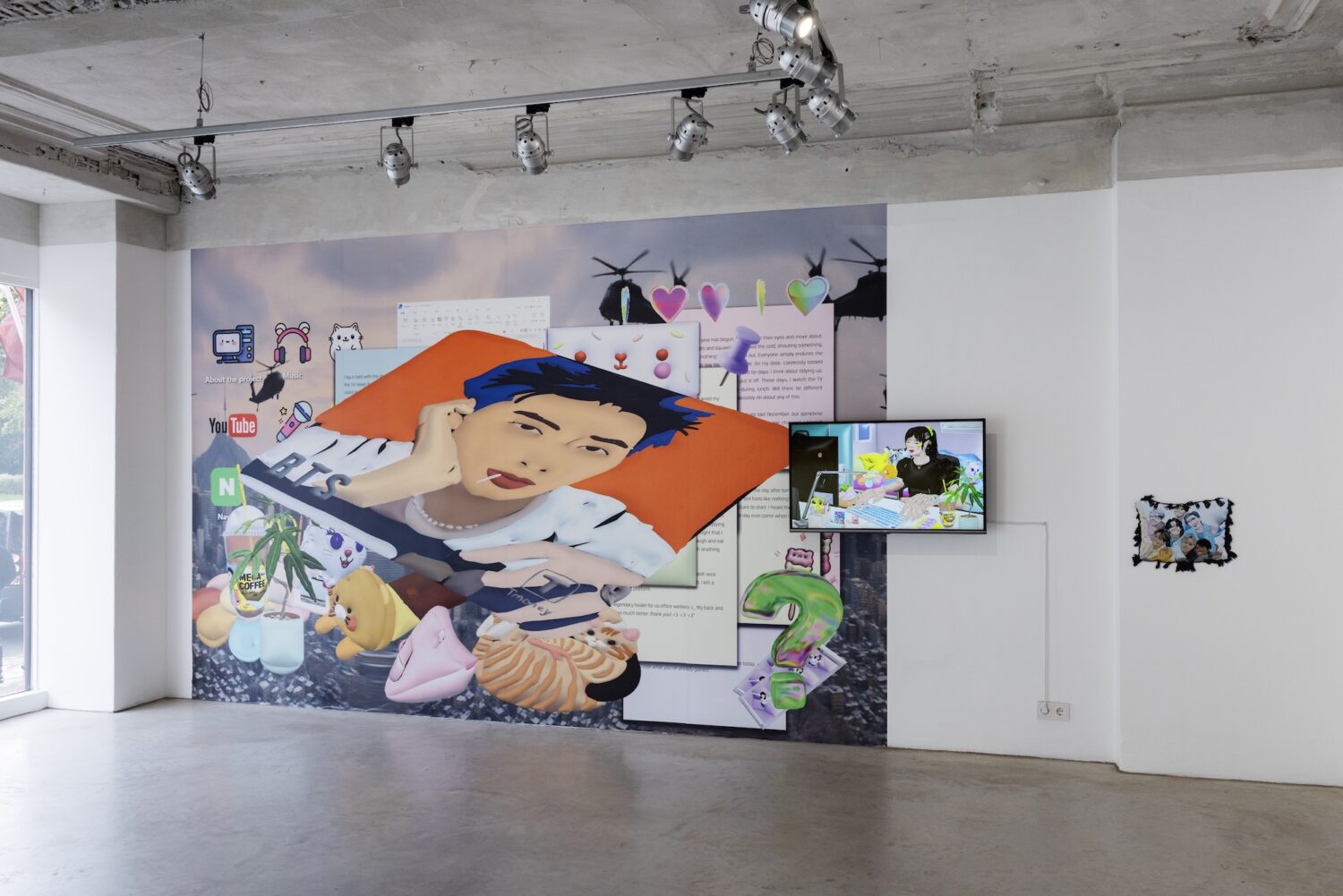
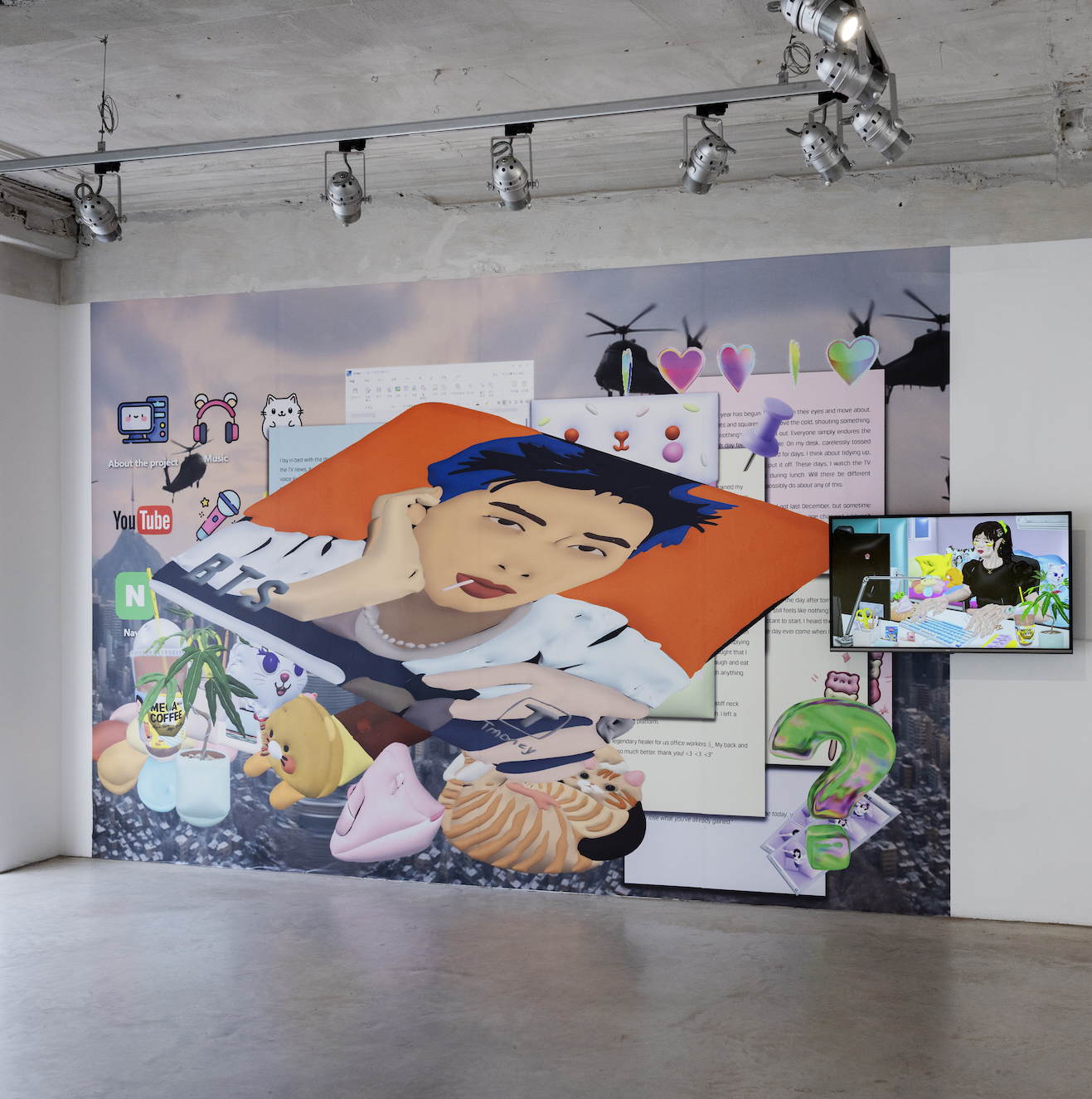
Installation view of ’Adonis Syndrome’ at Galerija ASNI, Riga, in Autumn 2025. Photo by Kristīne Madjare
I reflect on two exhibition projects I curated recently, one in Riga, Latvia, and one in Tainan, Taiwan. They unfolded in very different contexts, yet both made visible how mobility operates less as a visible action than as a structural condition shaping the work itself.
Adonis Syndrome, presented at Galerija ASNI in Riga in Autumn 2025, brought together artists Choulgue Jung, U Jeong Seo and Juhang Ryu from Korea, and Līga Spunde from Latvia around questions of the body and physical appearance. Rather than treating these concerns as culturally specific, the exhibition approached them as shared social pressures related to visibility, discipline, and self-regulation. Such pressures recur across different social contexts, even as they take on various forms.
The artworks entered the exhibition from different institutional and production environments, shaped by varying expectations regarding presentation, circulation, and audience engagement. Interpretations shifted accordingly, and so did the positions from which responsibility was assigned—between artist, institution, and audience.
Riga’s historical and political layering provided a particular backdrop for this process. The exhibition did not address international exchange as an explicit theme. Instead, it allowed questions around the body to circulate within an institutional setting shaped by local histories yet not easily transferable elsewhere, revealing how meaning moves even when the works themselves remain still.
**
The project at Soulangh Cultural Park in Tainan emerged from a long-standing dialogue that began in Paris, where I first met Slovak artists Peter Baran and Valentina Hučková, and Taiwanese artist Huang Chienhua at the Cité Internationale des Arts. What followed was not a response to difficulty, but a sustained collaboration built on mutual interest and trust.
Taking place in Tainan, the exhibition Reflections of Taiwan: Crossroads of Memory and Place brought together different cultural backgrounds through a shared curatorial framework, allowing artistic perspectives to resonate across contexts. Rather than presenting Taiwan as a fixed cultural image, the exhibition focused on memory, place, and lived experience, approaching the context through personal perspectives and situated reflections. Soulangh Cultural Park, a former industrial site repurposed as a cultural venue, provided a setting in which these exchanges could unfold with clarity and openness.
Rather than foregrounding difference as a source of tension, the project operated through attentiveness and dialogue. Mobility here was experienced as the circulation of ideas and relationships, shaped through collaboration and care, resulting in a coherent and quietly attentive exhibition.
Despite their very different contexts, the cases in Riga and Tainan point to a similar structure. Mobility unfolds through overlaps and frictions rather than through a linear flow, shaping how exhibitions take form.
What remained consistent was not the scale of movement but the way responsibilities, interpretations, and constraints gathered around it. The exhibitions appeared less as finished outcomes than as temporary alignments—always partial, always contingent.
Curatorial practice, in this sense, does not resolve mobility. It stays with it, working within its disruptions and asymmetries, and making judgments in the midst of conditions that never fully settle.
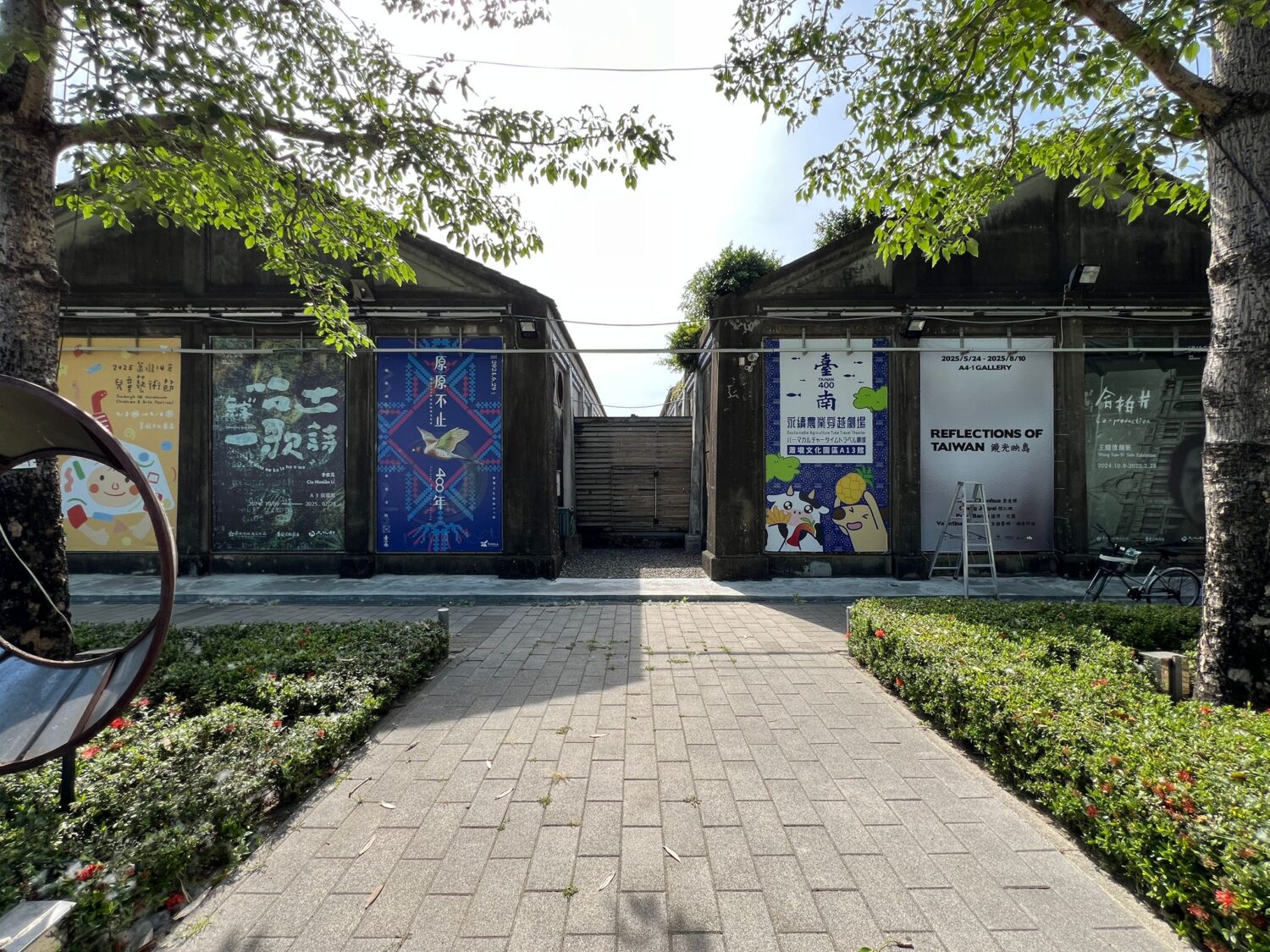
Exhibition site at Soulangh Cultural Park, Tainan. Photo by Peter Baran